
Low-Content Book Ideas for 2026 That Aren't Saturated (Puzzle, Activity and Coloring)
Practical low-content and activity book ideas for Amazon KDP in 2026 that go beyond plain notebooks: specific puzzle, activity and coloring angles, how to validate them, and how to stand out.
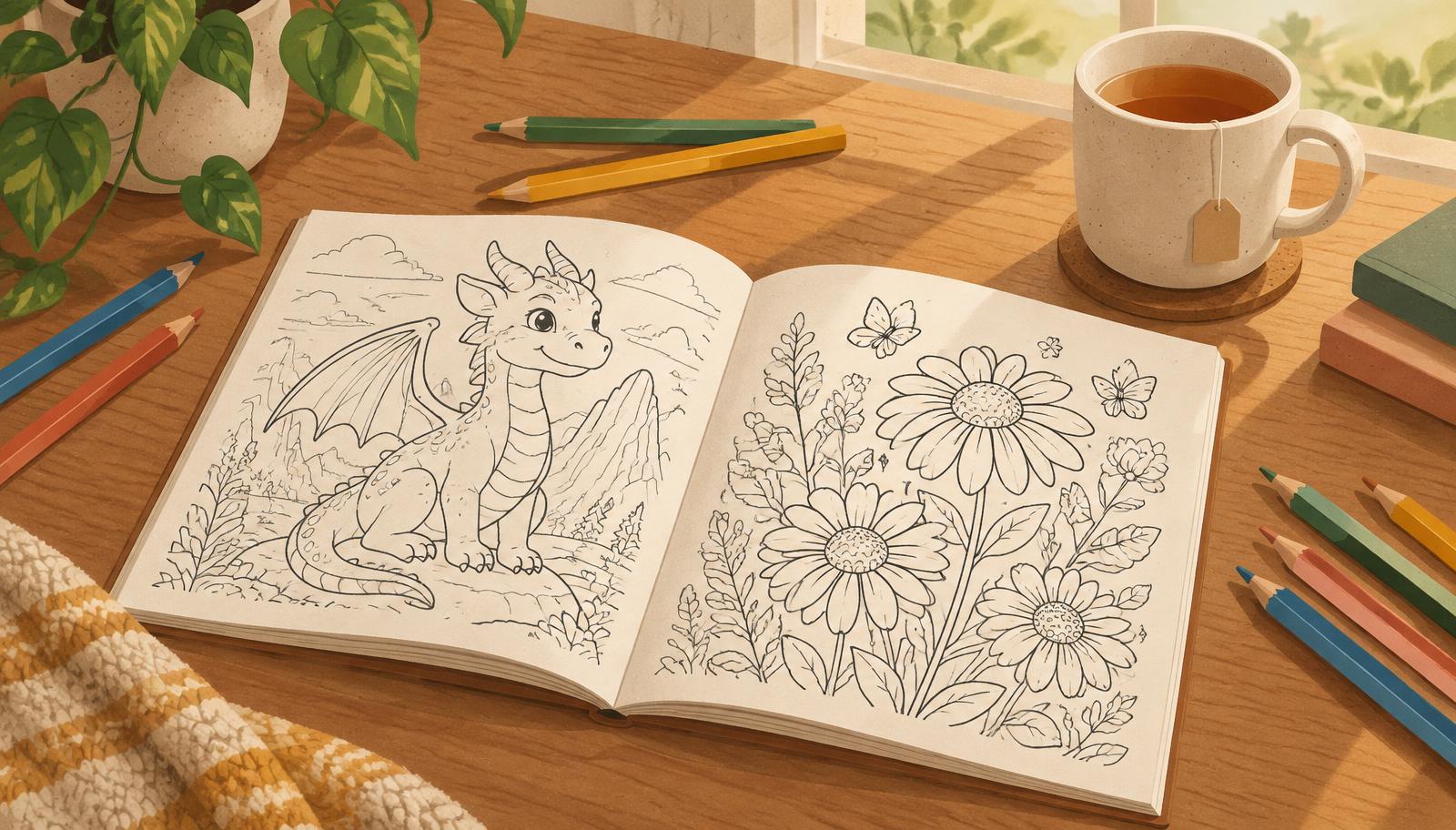
Blank lined notebooks and generic journals were the starting point for many KDP publishers. Today those shelves are crowded with near-identical books, and a new plain notebook rarely gets noticed. The opportunity has moved towards books that are low-content in effort but high in usefulness: puzzle, activity and coloring books built for a specific person.
This post lists ideas, but more importantly it shows the pattern behind them, so you can find your own. We don't quote sales figures here — no one outside Amazon has reliable numbers for a niche, and any tool claiming exact earnings is estimating. Validate every idea yourself before you invest time.
What "not saturated" really means
A niche isn't saturated just because there are many results. It is saturated when the results all serve the buyer equally well and there is nothing left to improve. Look for these signals:
- The top results look interchangeable — same cover style, same generic subtitle.
- The "Look inside" previews show low effort: repeated pages, tiny puzzles, missing answer keys.
- Reviews mention problems you could fix ("too hard for my 4-year-old", "no answers", "pages bleed through").
- The search phrase is specific (age, theme, skill), but results only match it loosely.
The winning move is usually narrower and better, not broader.
Puzzle book ideas
1. Large print puzzles for a single interest
Large print word searches exist in quantity, but large print books built around one hobby — birdwatching, baking, fishing, gardening, classic music — are less common. Combine large print with themed word lists and clear solutions. Our guide on making a word search book covers grid sizes and layout.
2. Mixed puzzle books for early readers
Many puzzle books are either toddler activity books or adult puzzle books. The gap is ages 6–8: children who can read short words and want "grown-up" puzzles at their level. Mix small word searches, picture crosswords, 4×4 and 6×6 sudoku and mazes.
3. Puzzle books in other languages
English-language puzzle books dominate. Word searches and crosswords in German, French, Spanish, Danish, Swedish or Norwegian — with correct letters (ä, ø, ñ and so on) and native word lists — serve buyers on Amazon's European marketplaces who have fewer choices. Bilingual vocabulary puzzle books are another angle for language learners.
4. Travel-sized puzzle books for a specific trip
"Road trip puzzle book for kids", "airplane activity book" — combine with a destination or holiday and keep pages simple enough to solve in a car.
Activity book ideas
5. Skill-first activity books
Instead of a theme first, start with a skill a parent is actively working on: pencil control, counting to 20, the alphabet, scissors skills, focus. Then wrap it in a theme. "Pencil control and tracing for preschoolers: construction trucks" answers a parent's need and a child's interest. Free letter tracing worksheets are a quick way to test the format.
6. Seasonal activity books with a narrow window
Halloween, Christmas, Easter, Valentine's, summer break and back to school create predictable demand peaks. Generic seasonal books are crowded; specific ones (a "Halloween activity book for toddlers ages 2–4" with very simple pages) are less so. Publish well ahead of the season so the book is indexed and has time to be found.
7. Activity books for specific situations
Waiting rooms, hospital stays, a new sibling, starting school, moving house. These books help a parent through a moment, and the theme can carry gentle reassurance alongside the puzzles.
8. Classroom-ready puzzle packs
Teachers buy books they can use for early finishers and quiet time. Clear difficulty levels, an answer key and pages that work in black and white matter more than decoration. Odd-one-out, spot-the-difference and logic pages are useful here; try our odd one out worksheets to see the format.
Coloring book ideas
9. Color by number for younger kids
Color by number books for adults are common, but simple ones for ages 4–7 — big areas, few colors, a clear key — are less common. They combine coloring with number recognition, which parents value. The free color by number generator shows how simple pages can look.
10. Coloring books for a very specific interest
Not "animals" but "farm animals of the world", "deep sea creatures", "construction vehicles", "cats in cafés". The more specific the interest, the more the buyer feels the book was made for them.
11. Bold and easy coloring for adults
Not all adults want intricate mandalas. Books with bold lines and large areas suit people with limited vision, beginners and anyone who wants to finish a page in one sitting.
12. Mixed activity books for adults
Puzzle books for adults are usually one format repeated: all sudoku, all word search. A mixed book with word searches, mazes, logic grids and spot-the-difference scenes, in calm black-and-white line art, suits commuters, holidays and people who like variety. Keep instructions short and solutions at the back.
Make the angle visible
An idea only helps if the buyer can see it in a second. Put the audience and the angle on the cover and in the title — "ages 4–6", "large print", "with answers", "in Spanish" — and show real interior pages in the description and the "Look inside" preview. If two books look the same as thumbnails, the buyer picks the one with more reviews, so your difference has to be obvious before anyone clicks.
Formats to treat with care
- Plain notebooks and journals: very crowded and hard to differentiate without strong design or a specific audience.
- Anything with trademarks: characters, brands, sports teams and franchise names are off-limits unless you hold the rights, and KDP may block or remove the book.
- Copies of bestsellers: imitating a successful cover or title is risky and doesn't build a lasting catalogue.
How to validate an idea in under an hour
- Search Amazon for the phrase your buyer would type and read the autocomplete suggestions.
- Read the first page of results: what are they missing? Read the 2- and 3-star reviews of the top books.
- Check the Best Sellers Rank of a few top books — a lower number means more recent sales, but it changes daily, so look at several books rather than one.
- Make a sample page and look at it next to the competitors' previews. If yours isn't clearly better for the buyer, refine the angle.
- Plan a series: if the first book works, can you make three more in the same style? Series help buyers find your other books.
Our older post on low-competition KDP niches covers broader non-fiction ideas, and the keywords guide helps once you know your angle.
Stay on the right side of KDP's rules
KDP's content guidelines apply to low-content books too. Avoid near-duplicate books published in bulk, misleading titles, keyword stuffing in titles or subtitles, and trademarked names. KDP also asks whether your book contains AI-generated text, images or translations — answer honestly. And remember that a "low-content" book still needs real quality control: correct puzzles, clean margins and an answer key.
Doing it with VibeBooky
VibeBooky makes it quick to test these ideas. Describe an activity, puzzle or coloring book in the chat — including the language — and the activity pages (mazes, word searches, sudoku, dot-to-dot, spot the difference, tracing, color by number, picture crosswords and more) are generated and validated by algorithms, with the answer key drawn from the stored solutions. Coloring and comic books use AI illustration. Every book type exports as a print-ready PDF and has a KDP workspace for the listing. It won't tell you which niche will sell — that's your research — but it lets you produce a polished sample book in an afternoon. Start for free.
Frequently asked questions
+ Are low-content books still worth it in 2026?
Plain notebooks and generic journals are very crowded. Puzzle, activity and coloring books aimed at a specific audience, with correct puzzles and good design, still have room. Validate each idea by researching Amazon results and reviews before you publish.
+ What counts as a low-content book on KDP?
KDP uses the term for books like journals, notebooks and planners with little or no text, and lets you mark a paperback as low-content during setup. Puzzle and activity books are often grouped with them in practice. Check KDP's help pages for what the low-content option changes, for example around ISBNs and distribution.
+ Can I use AI to make low-content books?
Yes, KDP allows AI-generated content, but it asks you to disclose AI-generated text, images and translations during publishing. Quality and originality still matter; avoid publishing many near-identical books.
Ready to create your first coloring book?
Generate clean line-art pages and print-ready KDP covers in minutes.
Get started freeKeep reading